
Designing Low Carbon Retirement Homes That Stand the Test of Time
Introduction
The climate crisis is becoming increasingly evident today due to unpredictable weather patterns and the growing frequency of natural disasters around the globe.
Construction activity contributes significantly to this crisis through the release of greenhouse gases. The figures are alarming, with around 25 percent of total carbon emissions in the UK attributed to construction activities and material production. [1] Although these statistics are concerning, they also present an opportunity for architects and developers to make meaningful changes through the buildings they design, construct and operate.
At the same time, there is an increasing need for care homes and senior living accommodation in the UK. By 2040 the UK will require approximately 165,000 additional care home beds. [2] This demand must be met while simultaneously achieving net-zero carbon emissions. This article therefore focuses on introducing low-carbon materials and strategies that can help achieve this goal.
Overcoming the Climate Emergency
Net-zero or low-carbon footprint care homes and senior living facilities are essential for addressing the environmental impact of the care sector while promoting a sustainable future for older adults.
These facilities must incorporate:
new material approaches
energy efficiency strategies
renewable technologies
from the outset.
These strategies help create a more sustainable model for elder care while mitigating the environmental impact of the additional housing needed for an aging population.
There are multiple ways to reduce the carbon footprint of buildings and achieve operational carbon neutrality.

Wildfires and other natural disasters have been increasing in the UK year on year
The Need for Carbon-Neutral Retirement Homes
A combination of factors creates an urgent need for sustainable retirement housing:
The UK’s aging population, with one in four people expected to be over 60 by 2040.
Existing housing stock that is not designed for aging residents.
Growing environmental concerns linked to construction.
The typical UK home incorporates 174–194 tonnes of CO₂ equivalent in embodied carbon. [4]
For example, the embodied carbon of a two-bedroom house in the UK can be approximately 80,000 kg of CO₂e, which is comparable to 80 return flights to New York. [4]
Embodied carbon depends on several factors including:
building materials
construction systems
building type
design decisions
Operational carbon throughout the life of the building also plays a significant role in its environmental impact.
As the circular economy develops, materials are increasingly evaluated based on their entire lifecycle rather than just their immediate use. This shift has led to the development of new recycled and low-carbon materials.
Cross Laminated Timber (CLT)
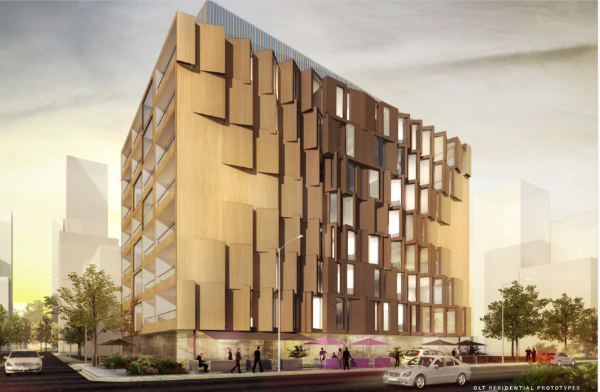
An eight-storey apartment block designed by Himmelzimmer / Studio505 using CLT which is a carbon negative building
Cross laminated timber (CLT), developed in the early 1990s, is a structural material with a negative carbon footprint.
One cubic meter of CLT can sequester approximately 180 kg of carbon dioxide, storing it for the life of the building.
CLT has several advantages:
strong structural properties
high compression, tension and shear strength
ability to span large distances
warm natural aesthetic
faster construction times
Construction using CLT can be six times faster than traditional methods and can provide material savings of around 15%. [5]
CLT can be used for:
floors
walls
roofs
structural panels
It can also be designed for reuse and disassembly, making it suitable for adaptable and circular building systems.
A recent example of CLT used in healthcare architecture is the Dyson Centre for Neonatal Care at the Royal United Hospital in Bath. [6]
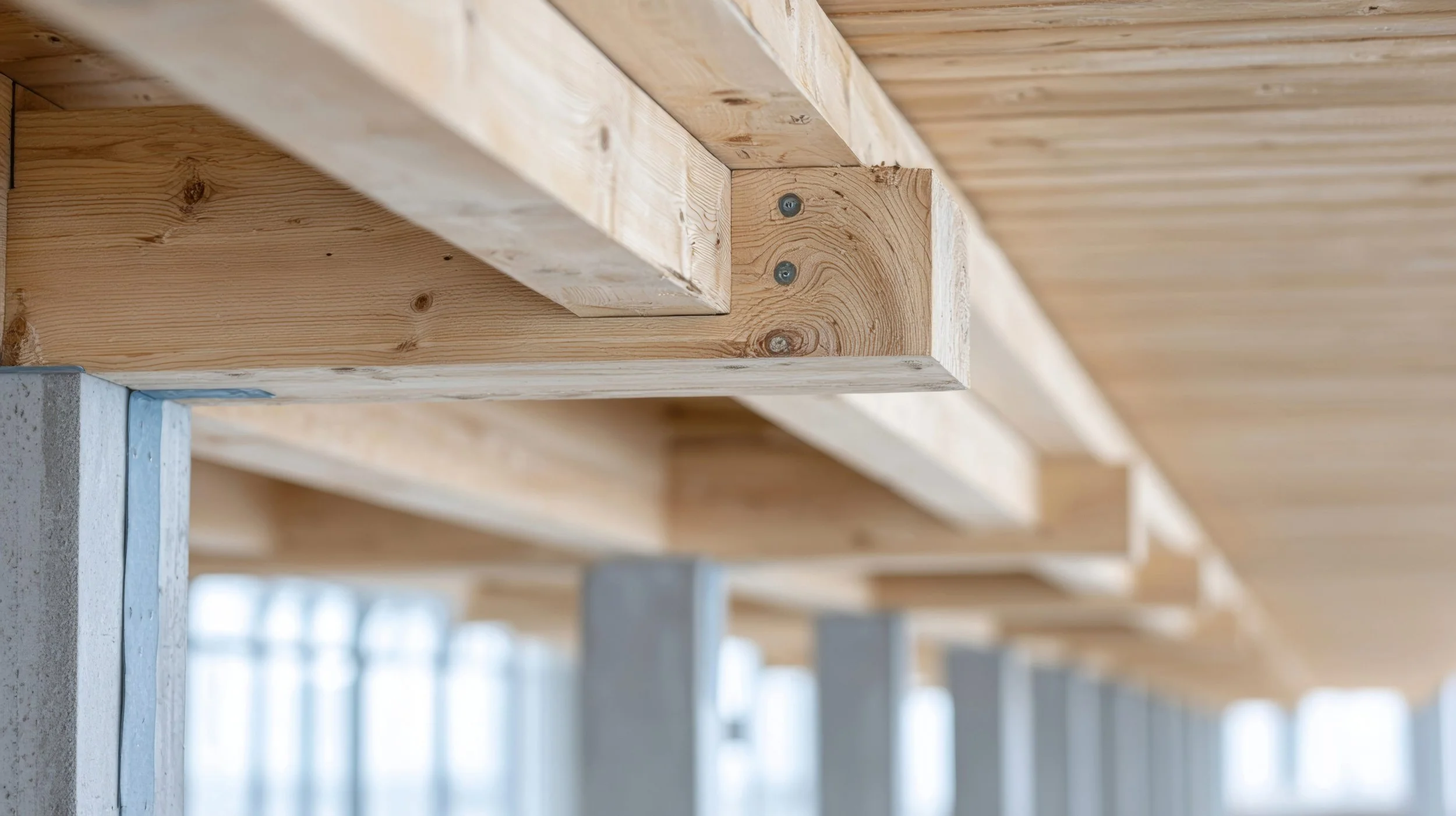
CLT can be used for the structural elements such as beams in buildings
Recycled Steel
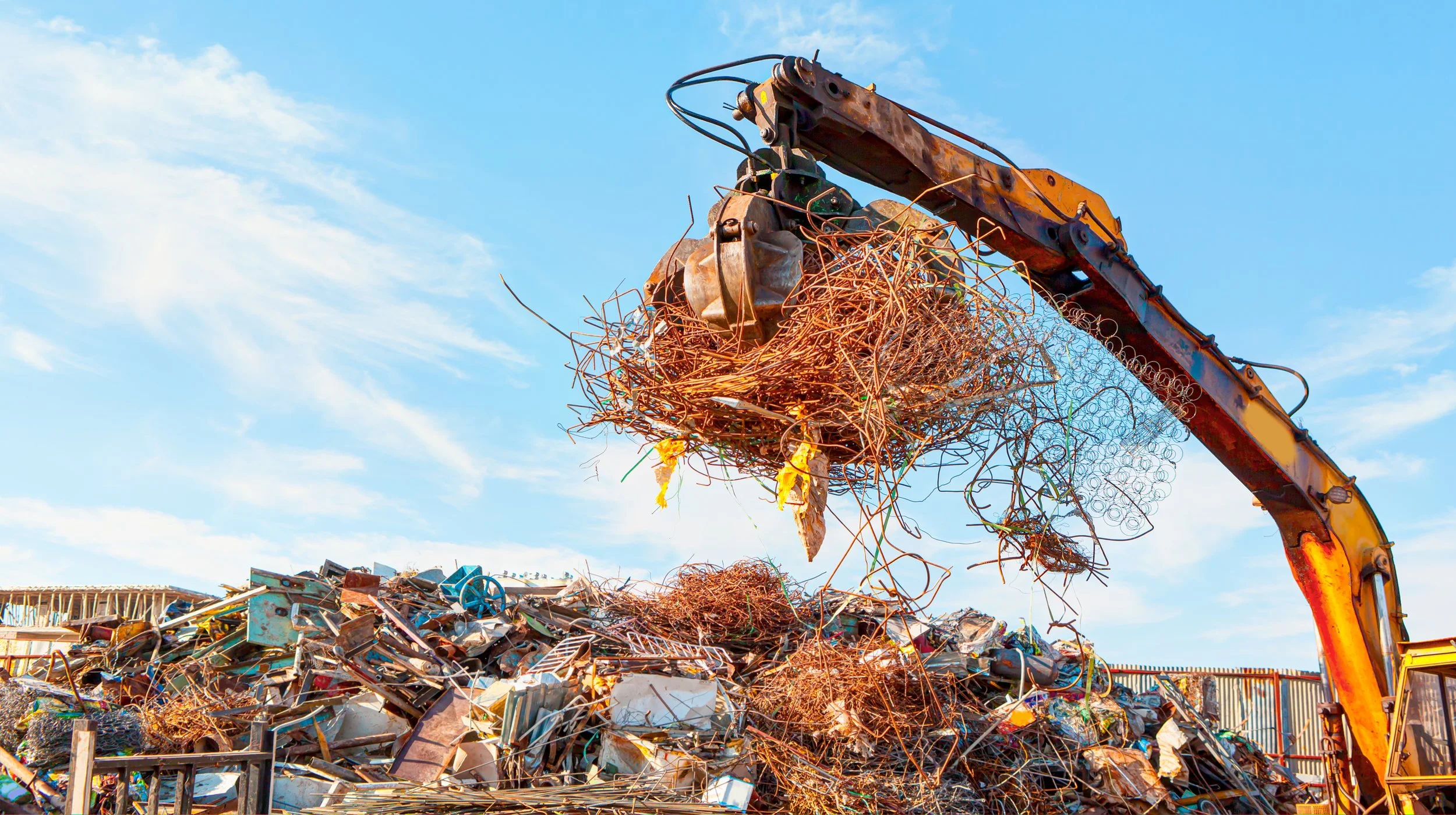
Steel and other metal sorting for recycling has become even more crucial in recent years.
Recycled steel is another material gaining importance in sustainable construction.
It is produced by collecting, sorting and melting used steel in a closed-loop recycling process.
Recycled steel can be used for:
structural components
reinforcement bars
beams and columns
roofing systems
cladding materials
Architects and engineers should specify recycled materials within tender documentation wherever appropriate.
Recycled Glass
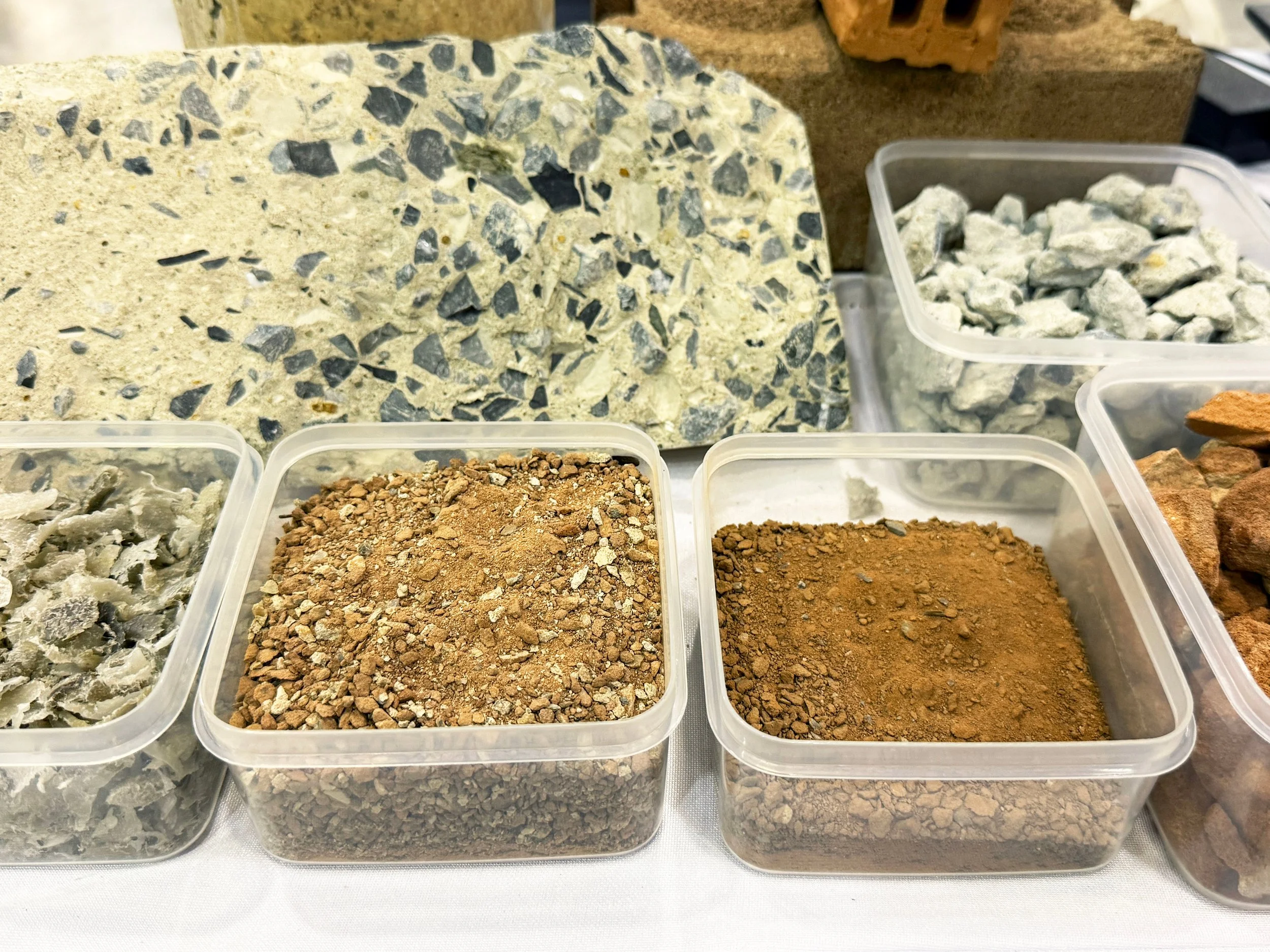
Aggregates created from recycled construction materials to be used for the formation of concrete
Glass is naturally infinitely recyclable, yet only about 9% of glass currently used in construction is recycled.
Recycled glass can be used in:
concrete as a sand replacement
asphalt
tiles
decorative elements
countertops
Another innovation is foamed glass insulation, created by heating crushed glass. It provides excellent thermal insulation and has very low embodied carbon.
It is often used in:
building foundations
base floors
insulation systems
Low-Carbon Brick Alternatives
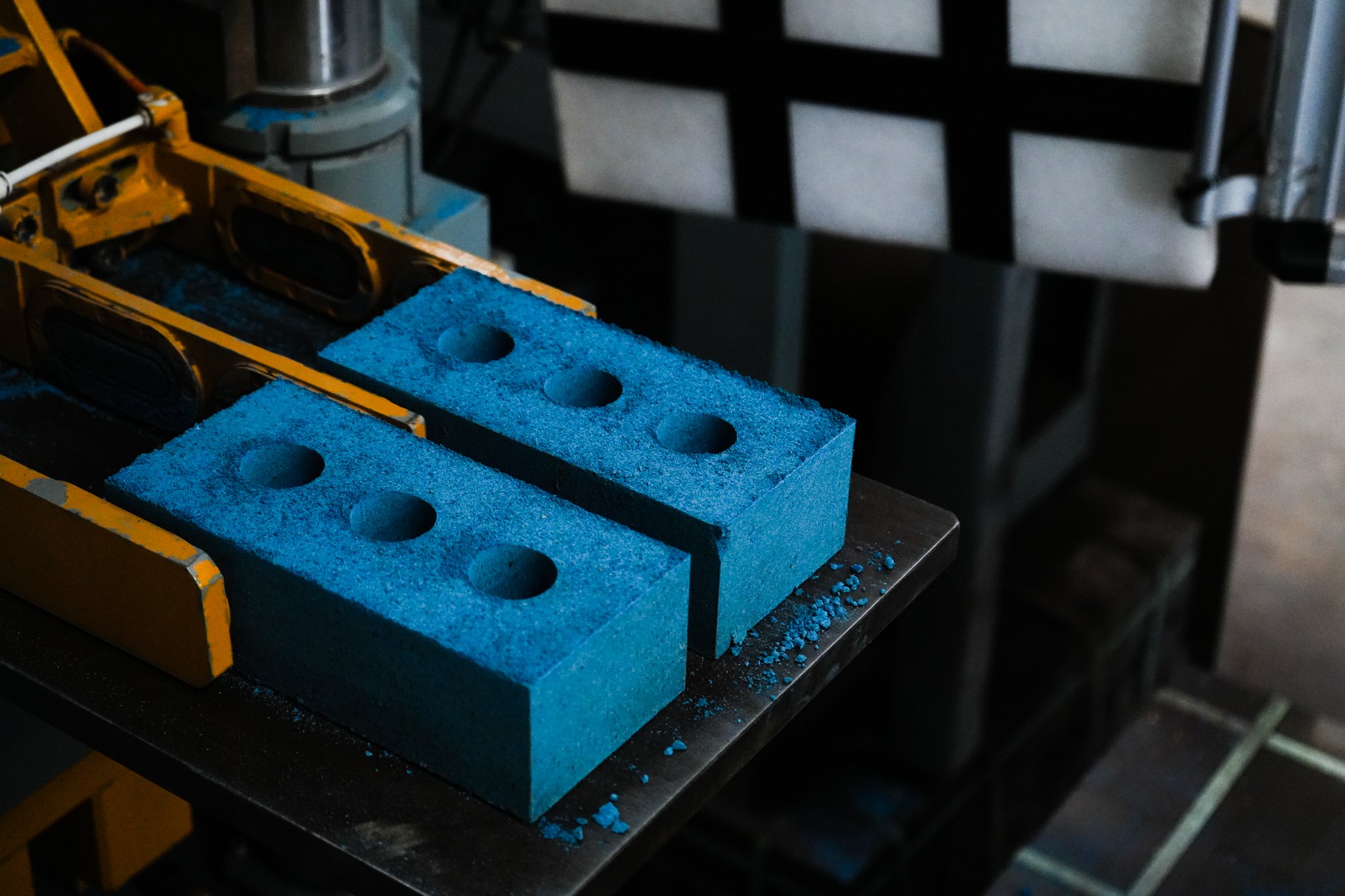
Low carbon brick. image credit: © KBriq by KENOTEQ
Low-carbon bricks reduce embodied carbon emissions by 30–70% during production. [7]
This is achieved through:
recycled materials
lower firing temperatures
alternative binders that capture CO₂
These bricks maintain the structural and aesthetic qualities of conventional bricks while significantly reducing environmental impact.
Some projects using low-carbon bricks have reported savings of over 300 tonnes of embodied carbon.
They also provide:
colour stability
fade resistance
flexible architectural finishes
Thermal and Acoustic Insulation
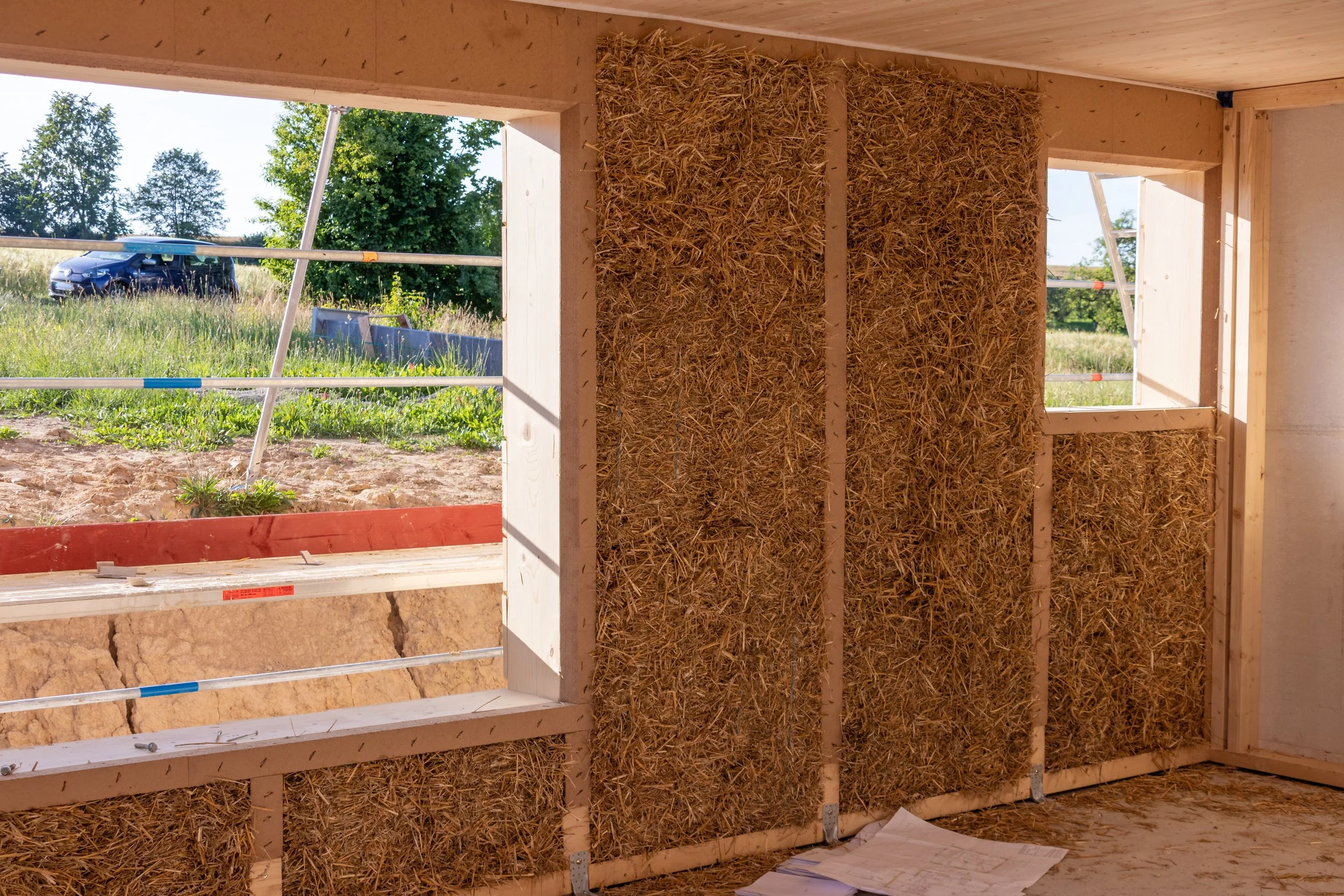
Straw insulation is one of the oldest and most sustainable building methods, now making a comeback in eco-friendly construction. It’s typically used in straw bale building
Traditional natural materials are increasingly inspiring modern insulation products.
One example is grass insulation, which converts grass clippings into insulation materials.
Grass insulation typically contains:
70% renewable grass fibres
20% recycled jute fibres
It can achieve a carbon negative rating of −1.5 kg CO₂ per kilogram produced. [8]
Grass insulation has thermal conductivity values of 0.034–0.041 W/mK, comparable to materials such as extruded polystyrene. [9]
Another alternative is wood fibre insulation, which can be installed as exterior insulation panels. Wood fibre products can help achieve passive house performance standards while storing carbon throughout the building’s life cycle.
Other Ways of Reducing the Carbon Footprint
In addition to material choices, operational carbon can be reduced through:
circular design strategies
refurbishment of existing buildings
improved maintenance systems
reduced energy consumption
Additional measures include:
ground source or air source heat pumps
EV charging infrastructure
renewable energy systems
recycling programs
carbon offset strategies such as planting trees and ground cover
Adaptable Spaces
A truly sustainable building must be adaptable to future changes in use.
Adaptability can be achieved through:
operable walls
modular structural systems
flexible structural grids
designing buildings with additional structural capacity
These strategies allow buildings to be modified or expanded in the future, significantly extending their lifespan.
For example, communal spaces in care homes can include operable partitions that allow rooms to be subdivided into smaller areas or combined into larger event spaces.
Another strategy is designing structures with extra load capacity, allowing future vertical extensions without constructing entirely new buildings.
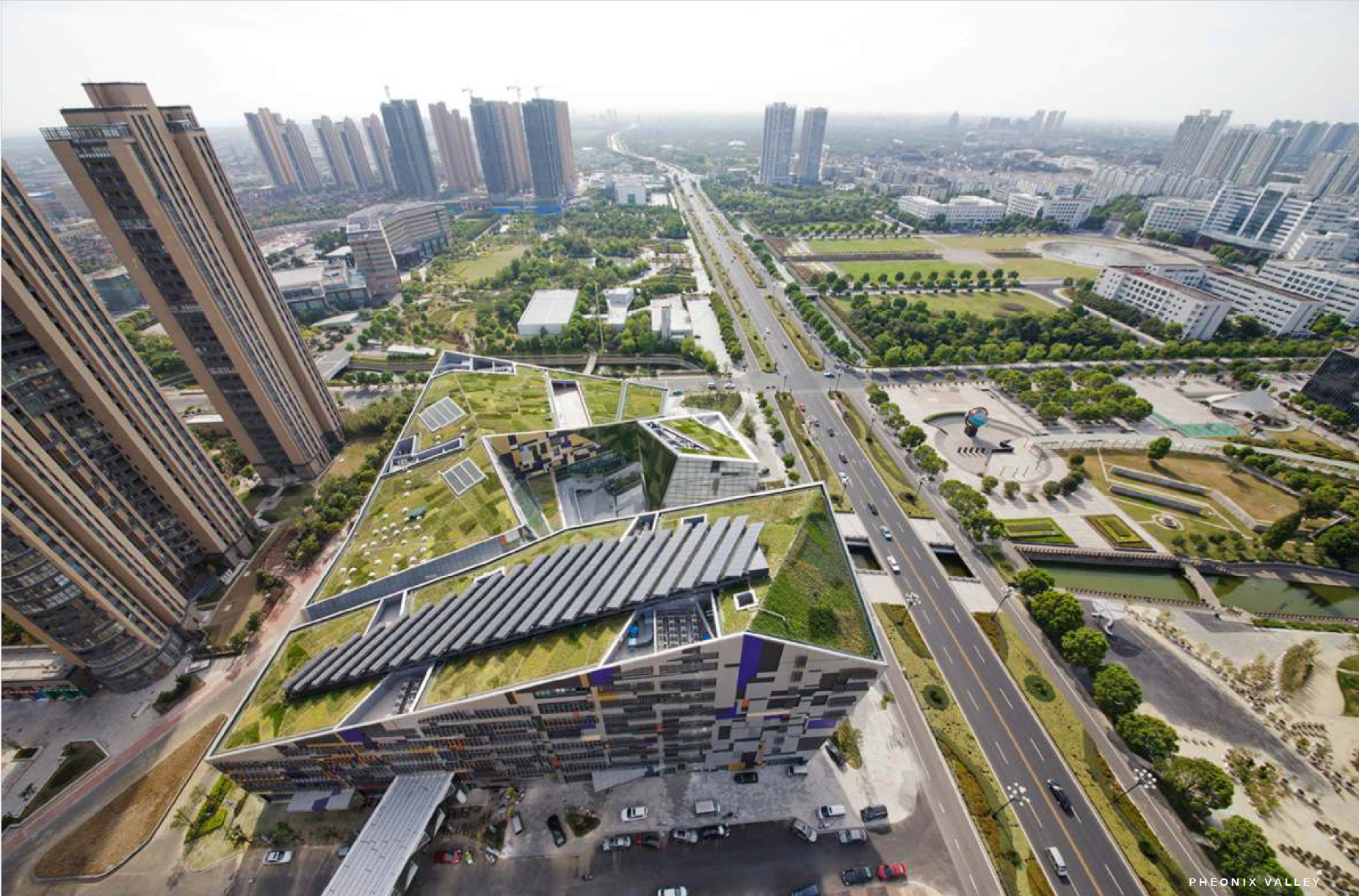
PV arrays on a new build housing scheme laid to reduce energy costs while reducing the carbon footprint of the building. Phoenix Valley, China. Architect Himmelzimmer / Studio505
Benefits
Sustainable buildings provide both environmental and financial benefits.
Research shows that sustainable products gain market share five times faster than non-sustainable alternatives.
Additionally, LEED-certified buildings can increase property values by up to 10% compared with non-certified buildings. [9]
The care sector is expected to house 180,000 additional residents by 2030, creating major opportunities for developers who adopt low-carbon strategies early.
Government regulations are also evolving. All new residential buildings, including care homes, must be net-zero ready by 2025. [10]
Low-carbon buildings also offer:
lower operational costs
reduced maintenance costs
protection against rising energy prices
potential tax incentives and government grants
Natural materials such as timber, cork and wood fibre also create a warm and calming atmosphere in senior living environments, supporting mental wellbeing.
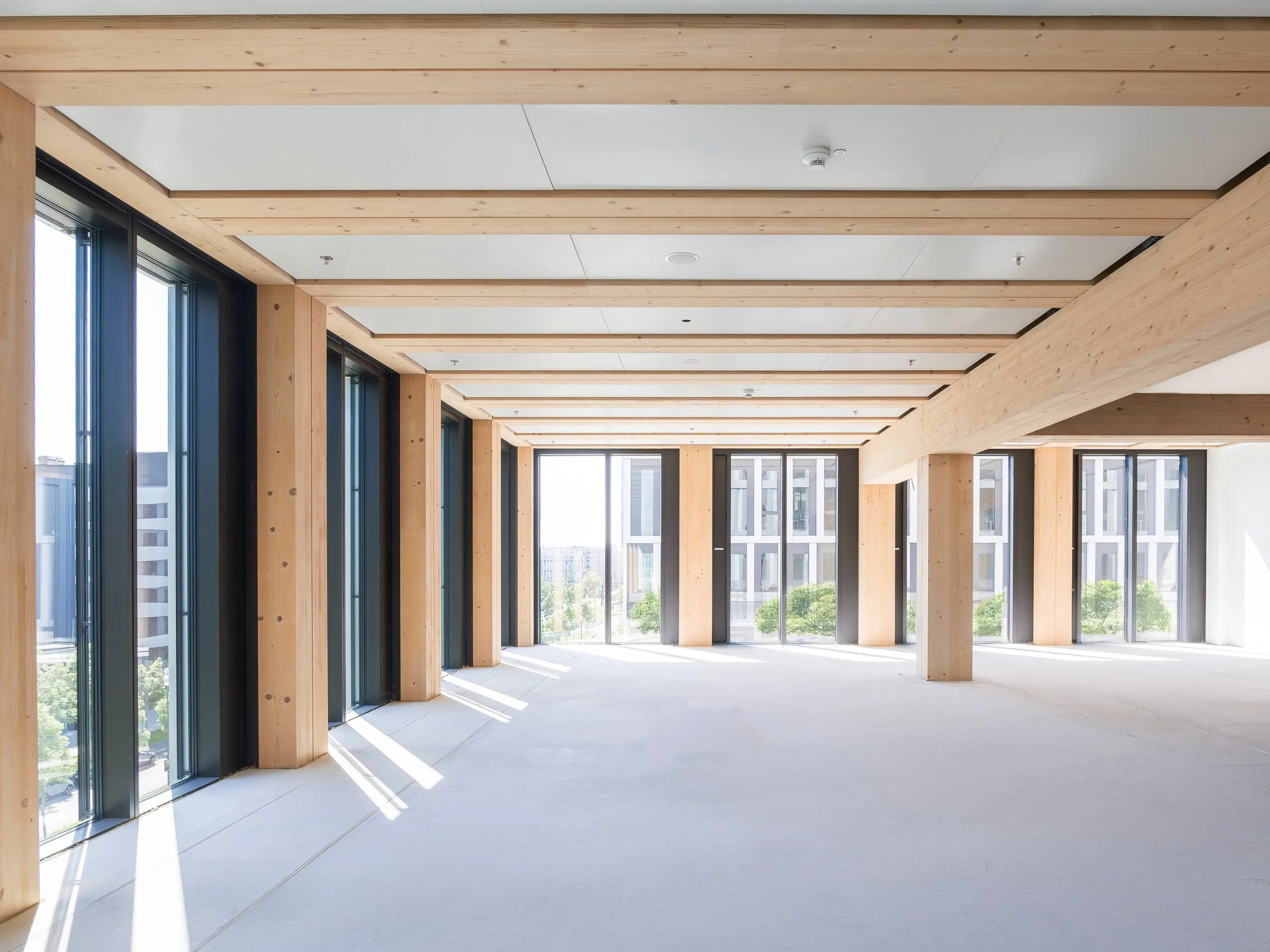
Considered design and material specifications that are carbon neutral can lead to enhanced independence which creates room for creative and meaningful activities for retirement home and care home users.
Conclusion
The combined pressures of climate change, rising material costs and an aging population make it essential to rethink how retirement housing is designed and constructed.
To align with national net-zero targets, the construction industry must reduce both embodied carbon and operational carbon while designing buildings that last longer.
Evidence from successful net-zero buildings shows that sustainable construction provides benefits beyond lower energy costs. These buildings can command higher market value while improving the wellbeing of residents.
As new materials and technologies continue to emerge, architects and developers must continue learning and applying these innovations.
A net-zero retirement village or care home, designed to store carbon and adapt to changing needs while offering comfortable and uplifting spaces, represents a vision worth investing in.
Reduced operational costs also contribute to a more attractive total cost of ownership, improving long-term investment value.
References
Environmental Audit Committee (2023) Emissions must be reduced in the construction of buildings if the UK is to meet net zero, MPs warn. UK Parliament. Available at: https://committees.parliament.uk/committee/62/environmental-audit-committee/news/171103/
Savills (2023) Spotlight: UK Care Home Development 2023. Available at: https://www.savills.co.uk/research_articles/229130/351928-0
BEIS (2021) UK announces world’s most ambitious climate target. Available at: https://www.gov.uk/government/news/uk-announces-worlds-most-ambitious-climate-target-ahead-of-climate-summit
Crawford, R.H., Stephan, A. and Prideaux, F. (2022) ‘Modelling the embodied carbon cost of UK domestic building construction: Today to 2050’, Energy and Buildings, 263, p.112050.
NC State College of Natural Resources (2022) 5 Benefits of Building with Cross-Laminated Timber. Available at: https://cnr.ncsu.edu/news/2022/08/5-benefits-cross-laminated-timber/
Feilden Clegg Bradley Studios (2011) The Dyson Centre for Neonatal Care. Available at: https://fcbstudios.com/projects/the-dyson-centre-for-neonatal-care/
OR
Timber Development UK (2024) The Dyson Centre for Neonatal Care.RIBAJ (2023) Low carbon bricks for your project as disruptors tackle climate change. Available at: https://www.ribaj.com/intelligence/low-carbon-bricks-tackle-climate-recycled-waste-cement-free-binders
Healthy Materials Lab (n.d.) Material Collections: Low-Carbon Materials.
Heritage Counts (2023) Measuring Carbon Emissions in the Built Environment.
Unlock Net Zero (n.d.) Future-proofing care: The path to zero-carbon care homes.
Wood for Good (2018) The healing power of wood in healthcare buildings.
Younis, A. and Dodoo, A. (2022) ‘Cross-laminated timber for building construction: A life-cycle assessment overview’, Journal of Building Engineering, 52.